












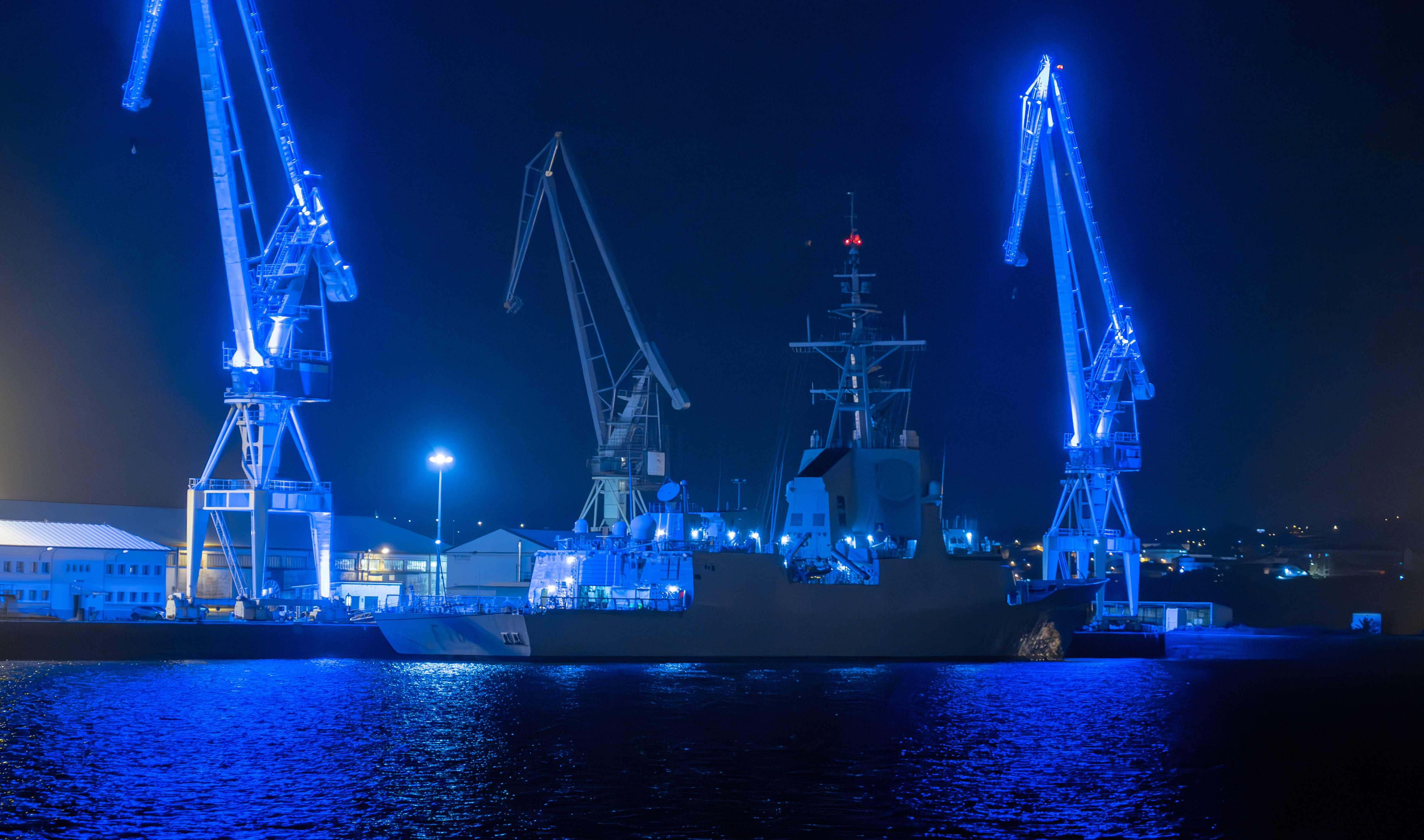



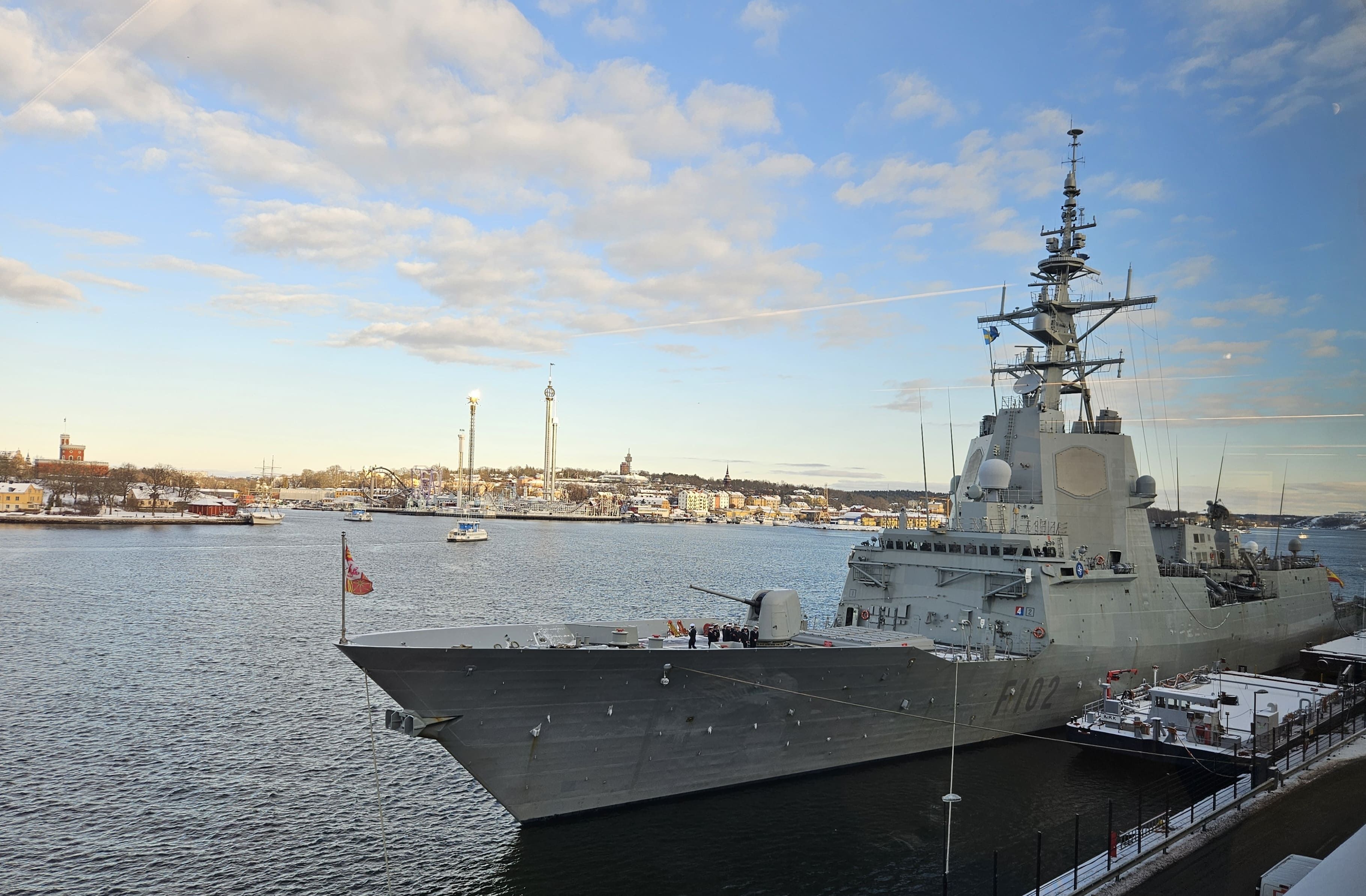
The visit of the Spanish Navy frigate F-102 Almirante Juan de Borbón to Stockholm provided Navantia with an opportunity to present its experience and capabilities in the design, construction and through-life support of complex surface combatants in a NATO context.
F-102 is currently serving as flagship of NATO Standing Naval Group 1 (SNMG-1), one of NATO’s standing maritime forces, operating primarily in Northern European waters. Its missions include deterrence, collective defence, naval presence and the strengthening of interoperability among allied navies. The Spanish Navy’s F-100-class frigates have an established record in NATO and EU operations and constitute a reference for sustained multinational naval operations.
During the visit to Stockholm, F 102 hosted more than one hundred visitors, including the Swedish Minister for Defence, Pål Jonson; the Minister for Civil Defence, Carl Oskar Bohlin; Rear Admiral Johan Norlen, Chief of Royal Swedish Navy; Rear Admiral Fredrik Linden, Director of the Swedish Defence Materiel Administration (FMV); as well as representatives from the defence industry and the media. The Minister was received by the Chief of Staff of the Spanish Navy, Admiral Antonio Piñeiro, and the Spanish Ambassador to Sweden, Luis Cuesta.
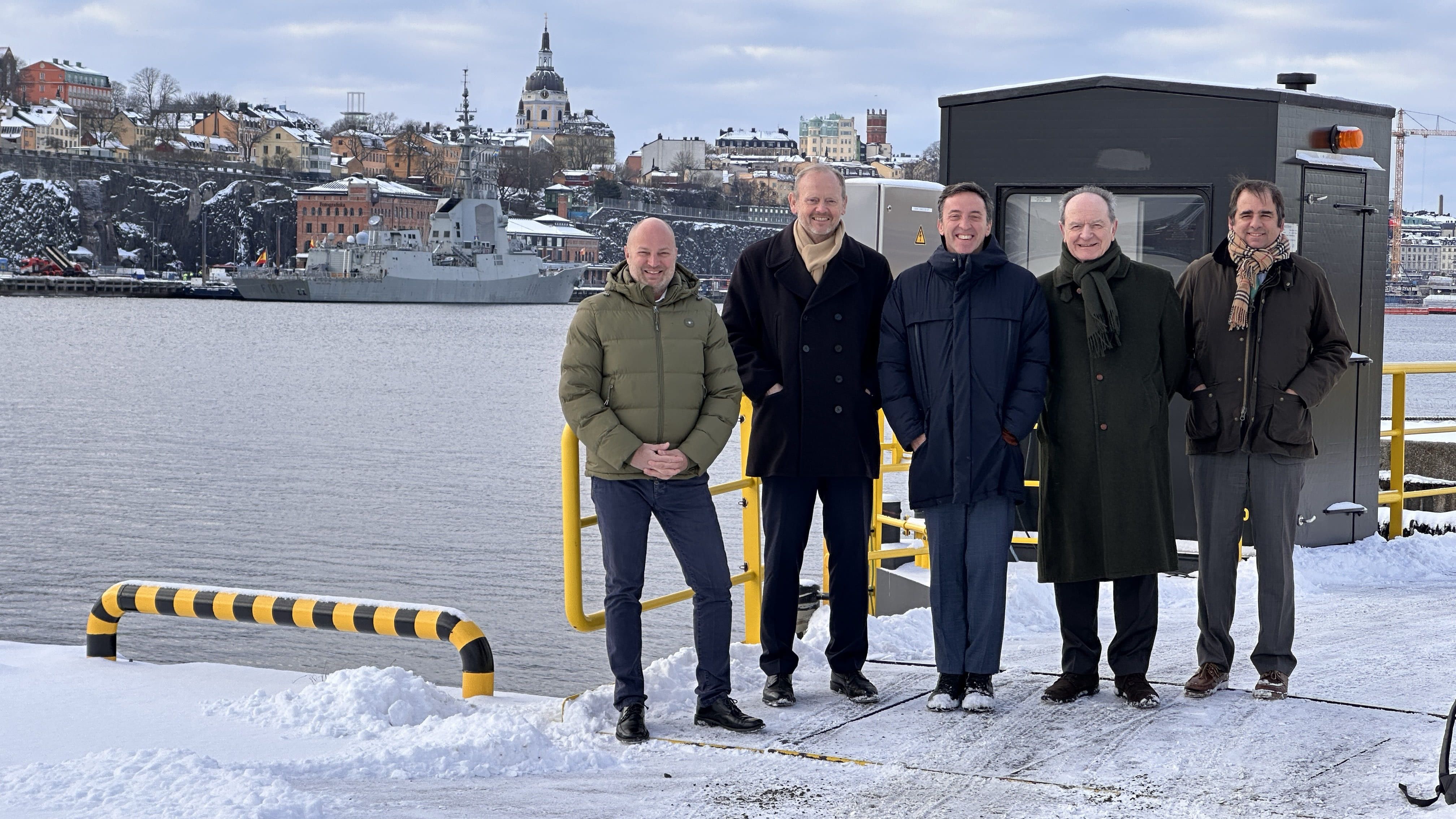
This event enabled exchanges focused on operational experience, sustainment, programme governance and integration within allied force structures.
Through the F-100 programme and other international surface-combatant projects, Navantia has acted as prime integrator for complex naval programmes. This experience includes programme governance, systems integration and the adaptation of naval platforms to different national operational concepts and sovereign system architectures.
In this context, Navantia also presented its approach for the future Swedish Luleå-class frigates. The proposed light frigate ALFA 4000 is designed to enable the integration of national combat systems and operation within NATO force structures. The design approach emphasises controlled development, defined interfaces and early alignment between design, classification, production and programme management in order to reduce technical and programme risk.
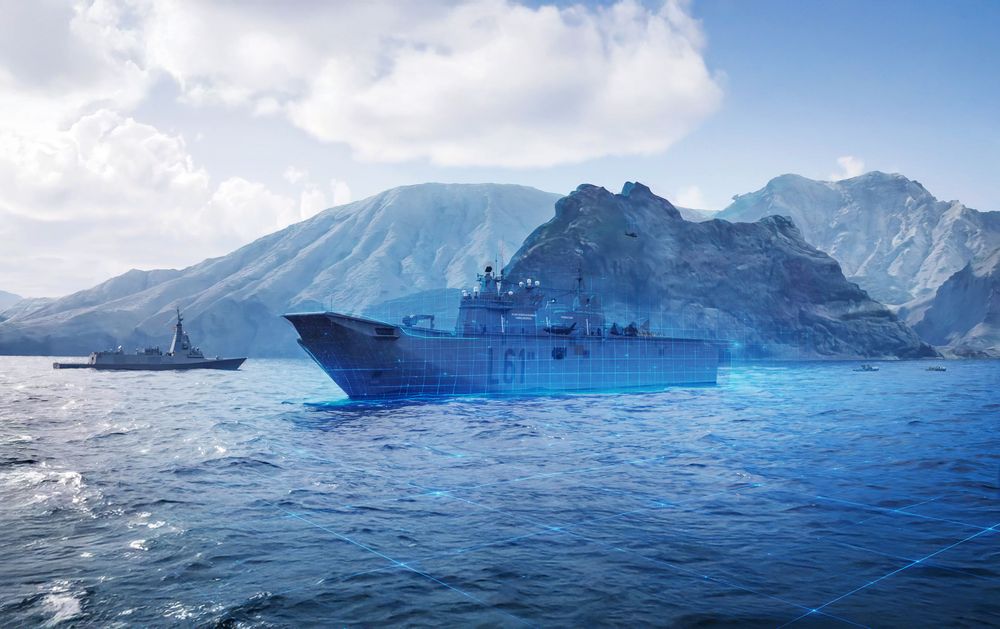
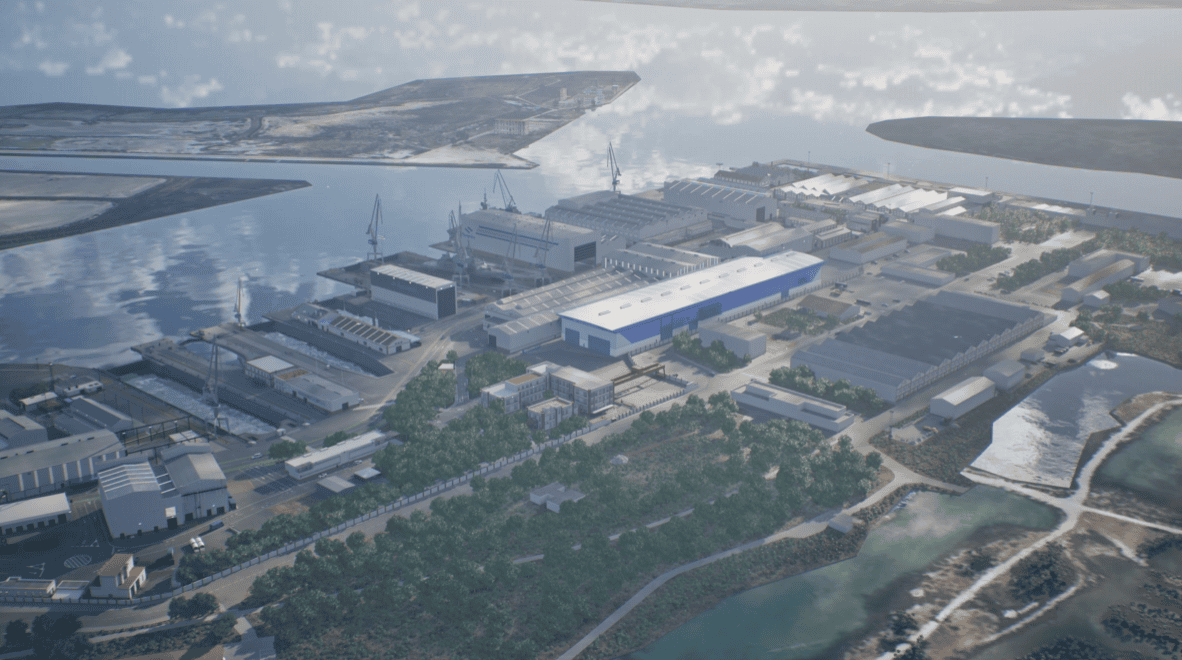
Navantia’s industrial set-up and build strategy are structured to support phased delivery aligned with defined pathways to Initial Operational Capability (IOC) and Full Operational Capability (FOC). Digital engineering methods, including digital twins and integrated support systems, are applied to support data-driven operation, predictive maintenance and high availability throughout the life cycle.
Within this framework, the proposed programme is intended to enable delivery of two frigates with trained crews by 2030, followed by two additional ships in 2031, subject to contractual arrangements. Emphasis is placed on long-term sustainment, training and through-life support, including industrial cooperation and support capabilities aligned with Swedish requirements.
Overall, the approach is positioned as a capability-based programme rather than a platform delivery, with focus on operational effect, programme governance, interoperability and long-term sustainment in cooperation with national and allied stakeholders.
“Navantia is in the position to be a reliable partner for Sweden, providing a rapidly operational naval capability, fully compliant with Swedish requirements, together with a through life support enhanced with state of the art digital technologies and close involvement of Swedish industry”, stated Navantia’s Chairman, Ricardo Domínguez.
During his visit to Sweden, Mr. Domínguez also had the opportunity to meet with representatives of Swedish industry in order to explain Navantias capabilities and reinforce collaboration.
Watch video here.