















By Rafael Seijo, F-110 Programme Director, Navantia
Some ships represent an evolution. Others mark the beginning of a new generation.
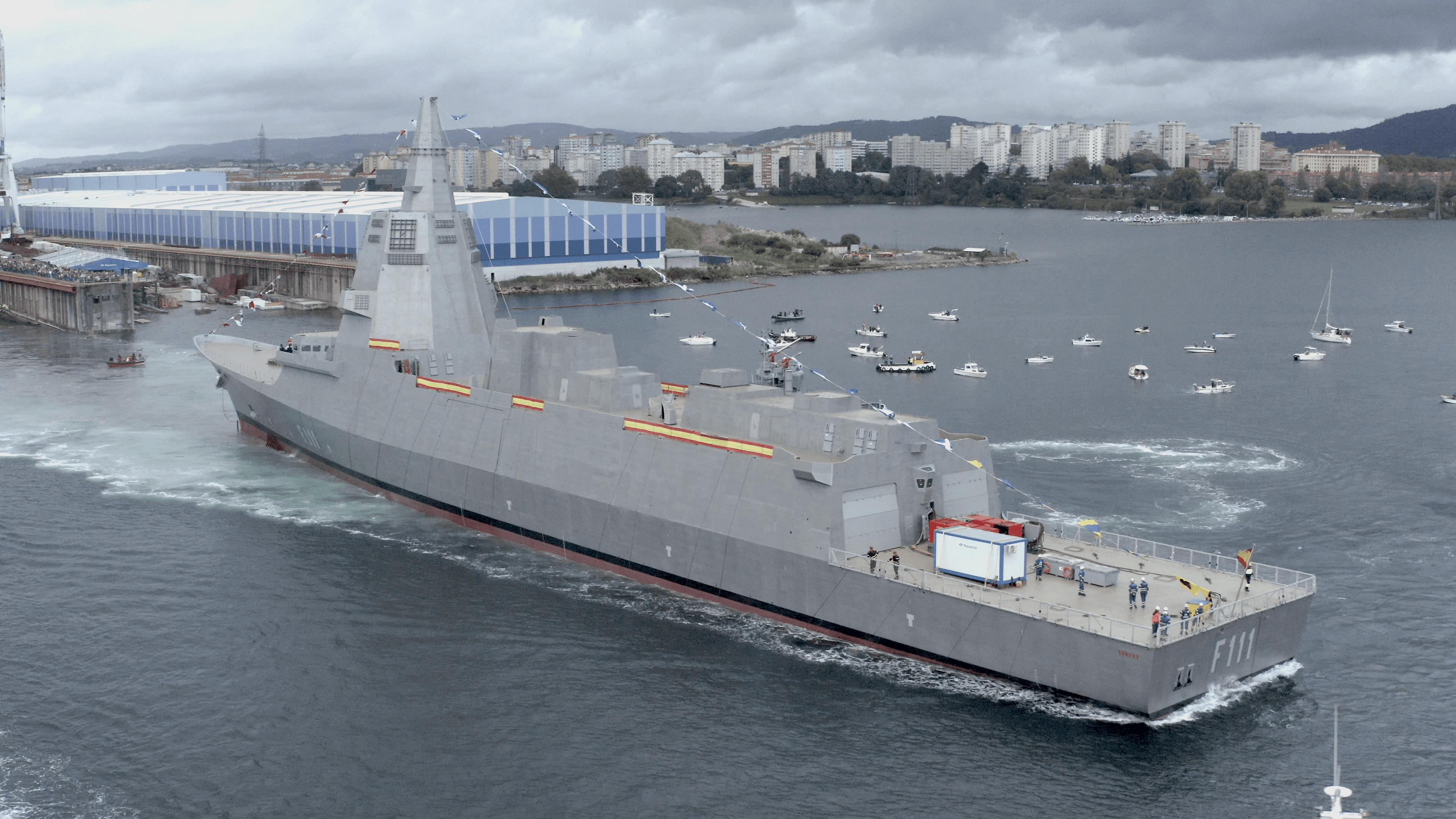
The F-110 belongs firmly in the latter category. It builds on decades of Spanish experience in the design, construction and integration of frigates, taking that expertise into a far more demanding operational environment: a multidomain battlespace in which submarine, air and surface threats, unmanned systems, electronic warfare and cyber threats are part of an increasingly complex reality.
To meet these challenges, the F-110 does more than incorporate new technologies. It integrates them to deliver new operational capabilities.
The five Bonifaz-class frigates are designed to replace the Santa María-class frigates and preserve an essential mission for the Spanish Navy: escorting and protecting the naval force. But they will do so with a platform designed from the outset to combine anti-submarine warfare, air defence and surface warfare capabilities, operate seamlessly alongside allied forces and evolve over decades of service.
The advantage of a modern warship lies not only in each of its individual sensors or systems. It lies in its ability to detect earlier, understand the operational picture more clearly, share information and respond in a coordinated manner.
And that is where the F-110 begins to set itself apart.
1. See, Understand and Respond
The first requirement of a modern surface combatant is the ability to build an accurate picture of what is happening around it.
The F-110 has been designed precisely to operate in this environment. Its combat architecture integrates SCOMBA, developed by Navantia, with technologies such as the SPY-7 radar and the International Aegis Fire Control Loop (IAFCL). This integration forms the foundation of the frigate’s air defence capability and enables the coordination of track management, doctrine and engagement functions.
This combination is particularly significant because it brings together SCOMBA’s sovereign capability and AEGIS-related air defence technology within a single architecture.
The F-110 is designed to operate simultaneously across multiple domains. Alongside its air defence and anti-surface capabilities, anti-submarine warfare is one of the core elements of its operational design, at a time when detecting and tracking increasingly stealthy submarines represents one of the major challenges facing modern navies.
The result is a multi-mission frigate designed not only to defend itself, but also to protect other units and contribute to the defence of a naval force.
And, crucially, to operate as an integral part of that force.
Interoperability has been embedded as a design principle. The combination of SCOMBA, AEGIS technology, SPY-7 and common operational standards is intended to enable the F-110 to integrate into multinational naval task groups and operate alongside allied forces.
2. A Digital Ship Designed to Maintain Its Edge for Decades
But the combat capability of a frigate is not determined solely by what it can do on the day it enters service.
It also depends on what it will be capable of doing ten, twenty or thirty years later.
That is why another of the F-110’s defining features lies beneath the surface: its digital architecture.
Sensors, systems, communications and services share an infrastructure designed to turn large volumes of data into actionable information for operating the ship.
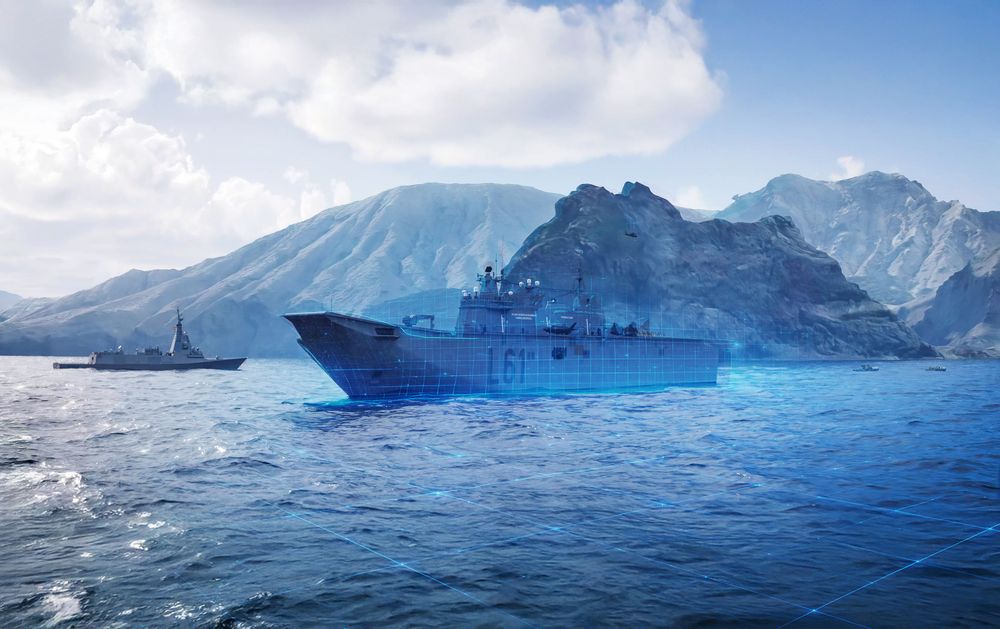
The Integrated Services System (ISS) acts as the platform’s digital nervous system. It integrates sensors, internal communications, connectivity and other services over a common infrastructure and is connected to systems including the Integrated Platform Management System and the Digital Twin.
The Digital Twin is more than a virtual representation of the frigate. It receives information from the ship’s systems and sensors to provide greater insight into its behaviour and support maintenance, operations, decision-making and crew training.
This architecture also provides something fundamental for a ship designed to remain in service for decades: the ability to evolve.
3. Spanish Experience for a New International Generation
None of this has been developed from scratch.
The F-110 builds on decades of collaboration between Navantia, Lockheed Martin, the Spanish Navy and the Ministry of Defence, as well as the experience gained through previous generations of warships.
The F-100 frigates demonstrated Spain’s ability to design and integrate advanced surface combatants and introduced the AEGIS system into the Spanish Navy. That expertise subsequently found international continuity through programmes for Norway and Australia.
The F-110 now takes that legacy a step further.
It is not simply about adding more advanced sensors to a new platform. It is about integrating naval architecture, systems integration, combat capability and digitalisation from the very outset of the ship’s design.
Innovation only acquires real value when it translates into operational capability.
That is perhaps the best way to understand the F-110: not as a collection of technologies, but as an integrated system designed to deliver an operational advantage in an increasingly demanding naval environment.
With the F-110, Spain continues a journey that began much earlier with previous generations of frigates, while opening a new chapter: one defined by connected, digitalised combat ships designed to evolve.
A new generation conceived in Spain to meet the naval defence challenges of the decades ahead.
From Spain to the world.
Because designing a frigate for the decades ahead means looking far beyond the horizon.