












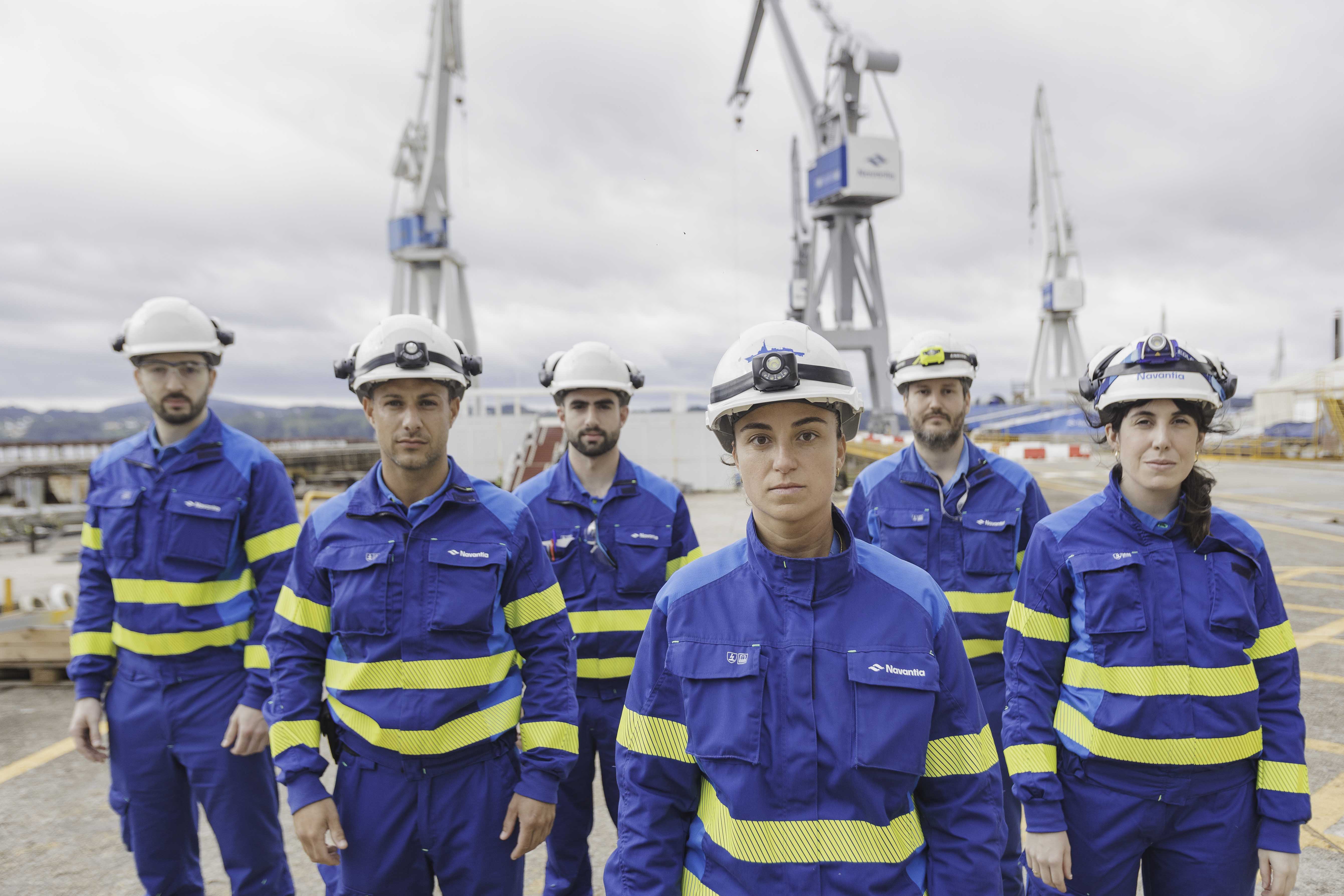




Corporate Governance

Navantia has a Corporate Governance model that contributes to integrity, efficiency and agility in its management. This model also strengthens the systems for supervising and controlling activities, managing risks and developing people, ensuring compliance with internal and external requirements. Good governance at Navantia promotes transparency and drives growth and the creation of sustainable value through the development of its strategy and the involvement of stakeholders in both the national and international markets.


Classification
of GHG emissions
Navantia holds full MITERD certification for the three components "Calculate", "Reduce" and "Offset" of the seal awarded by the Ministry in relation to the carbon footprint. The Register of carbon footprint, offsetting and absorption projects is a national, voluntary register aimed at encouraging the calculation and reduction of the carbon footprint of Spanish organisations, as well as promoting projects that improve Spain’s carbon sink capacity.
Classification
of GHG emissions
Navantia holds full MITERD certification for the three components "Calculate", "Reduce" and "Offset" of the seal awarded by the Ministry in relation to the carbon footprint. The Register of carbon footprint, offsetting and absorption projects is a national, voluntary register aimed at encouraging the calculation and reduction of the carbon footprint of Spanish organisations, as well as promoting projects that improve Spain’s carbon sink capacity.
Emission reduction

80T of emissions in 2023
amount offset
Solar panels installed
in all shipyards
GHG emission reduction
BY 41.38% SINCE 2018

Classification
of GHG emissions
GHG retain energy and warm the Earth, and their increase due to human activity raises the global temperature.

Scope 1
Direct GHG emissions. For example, emissions from combustion in boilers, furnaces, vehicles, etc. that are owned or controlled by the organisation.
Scope 2
Indirect GHG emissions associated with the generation of purchased and consumed electricity.
Scope 3
Indirect GHG emissions associated with the generation of electricity and other indirect emissions, such as the extraction and production of materials purchased by the organisation or business travel.
Navantia Obtains Full MITERD Certification
Navantia holds full MITERD certification for the three components "Calculate", "Reduce" and "Offset" of the seal awarded by the Ministry in relation to the carbon footprint. The Register of carbon footprint, offsetting and absorption projects is a national, voluntary register aimed at encouraging the calculation and reduction of the carbon footprint of Spanish organisations, as well as promoting projects that improve Spain’s carbon sink capacity.
Management System Principles
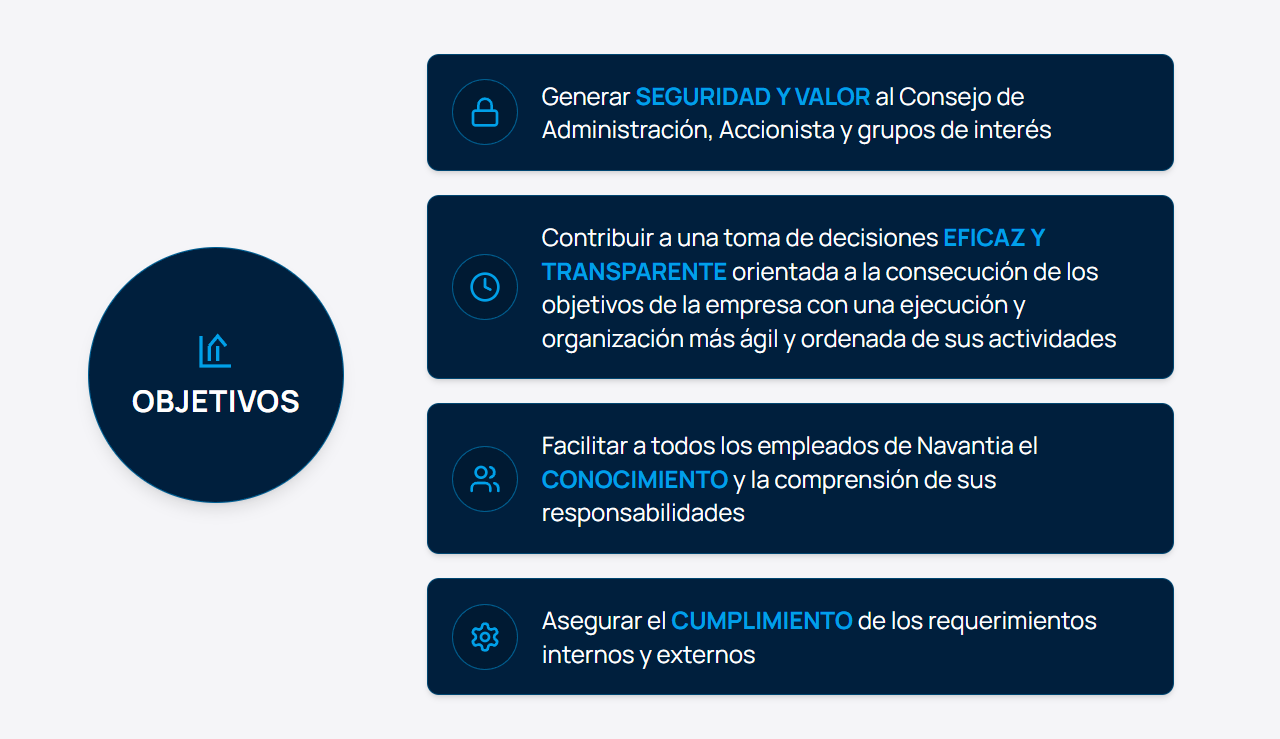
Navantia’s Management System is based on three key principles: integrity and hierarchy, to ensure the system’s consistency; simplicity and accessibility, to make it easier to understand and apply; and continuous improvement and updating, to guarantee its ongoing evolution. These pillars enable efficient management aligned with the company’s objectives.
Integrity and Hierarchy
Simplicity and Accessibility
Continuous Improvement and Updating
fighting climate change
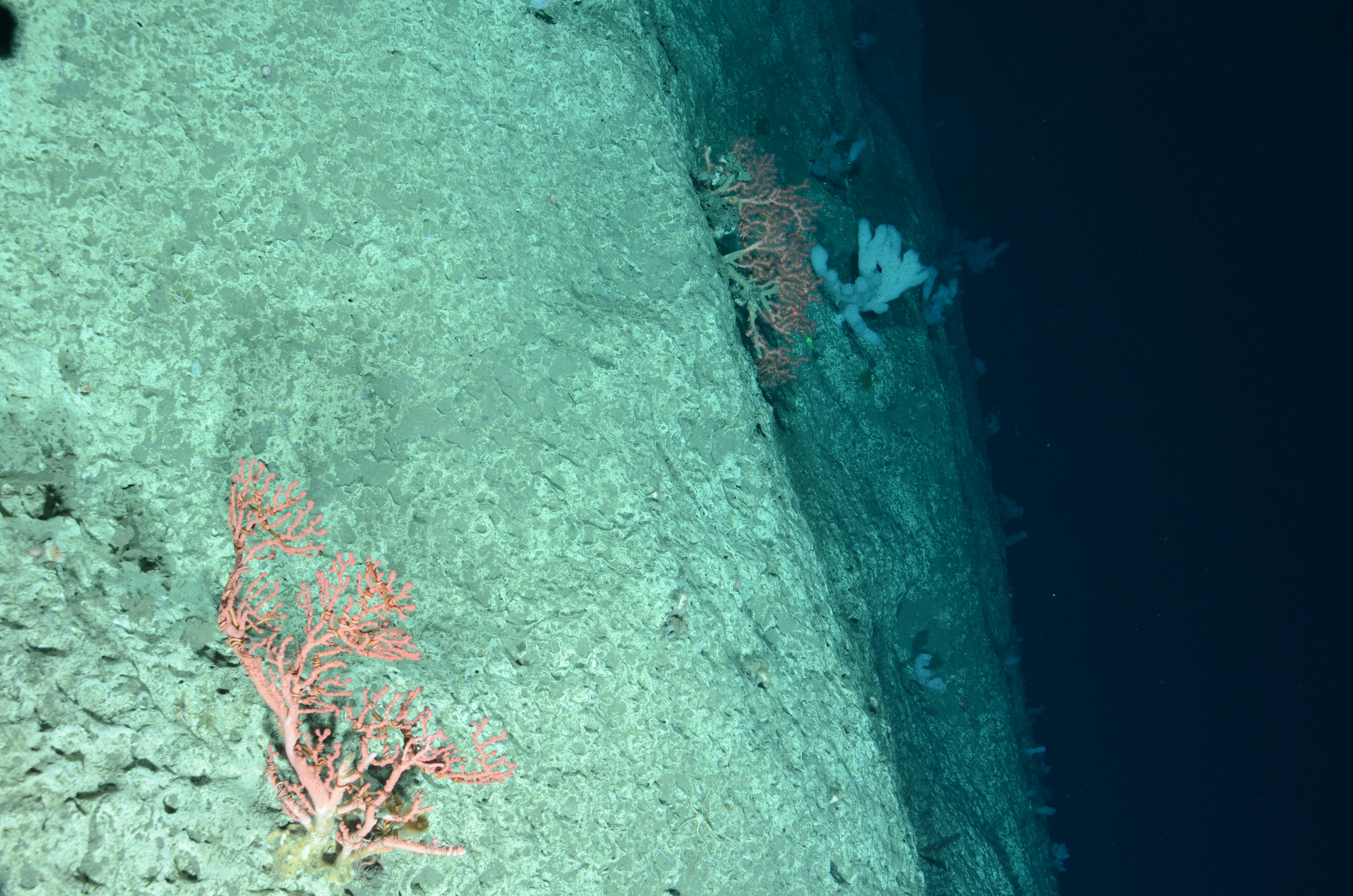
Navantia works to conserve biodiversity and protect marine and coastal ecosystems, promoting research in marine technology. Since 2020 it has been a signatory to the Biodiversity Pact with the Biodiversity Foundation of the Ministry for the Ecological Transition and the Demographic Challenge (MITERD), demonstrating its commitment to the conservation and sustainable use of biodiversity.
Navantia’s commitment to offsetting greenhouse gas (GHG) emissions is focused on the corporate project “Ecosistema Navantia”. This project aims to mitigate climate change by offsetting emissions, increasing the absorption capacity of carbon sinks and preserving biodiversity.
Initially focused on the Navantia Forest, through reforestation projects on land adjacent to our sites, the scope of Ecosistema Navantia is being broadened in two ways: on the one hand, closely linked to our core business, it includes blue carbon sequestration projects, i.e. offsetting through projects associated with marine and coastal ecosystems to support their conservation; on the other, our role goes beyond partially offsetting our carbon footprint, as we also link our projects to the good conservation status of the areas where they are carried out.
Navantia publishes data through GBIF (Global Biodiversity Information Facility) in collaboration with the Spanish GBIF Node (GBIF.ES), sponsored by the Ministry of Science and Innovation and managed by CSIC. It has shared information on benthic fauna in the marine ecosystem near its facilities, based on environmental monitoring plans carried out by the Environment Area.

Ecosistema Navantia
Emission offset projects for greenhouse gases (GHG) through reforestation (Navantia Forest) or blue carbon sequestration.

Biodiversity and Business
Projection of the Taskforce on Nature-related Financial Disclosures (TNFD) criteria onto corporate biodiversity (valuation of ecosystems/ecosystem services).
Documentation
Navantia’s Management System documentation is designed to be clear, accessible and consistent. It is organised according to uniform criteria that facilitate understanding and application, and is continuously updated to adapt to the organisation’s needs and improve its effectiveness.

Navantia Policies
Navantia’s policies reflect the company’s commitment to quality, safety, the environment and continuous improvement. They are aligned with the organisation’s strategic objectives and guide all activities, ensuring responsible, efficient and sustainable management in each of its processes.